

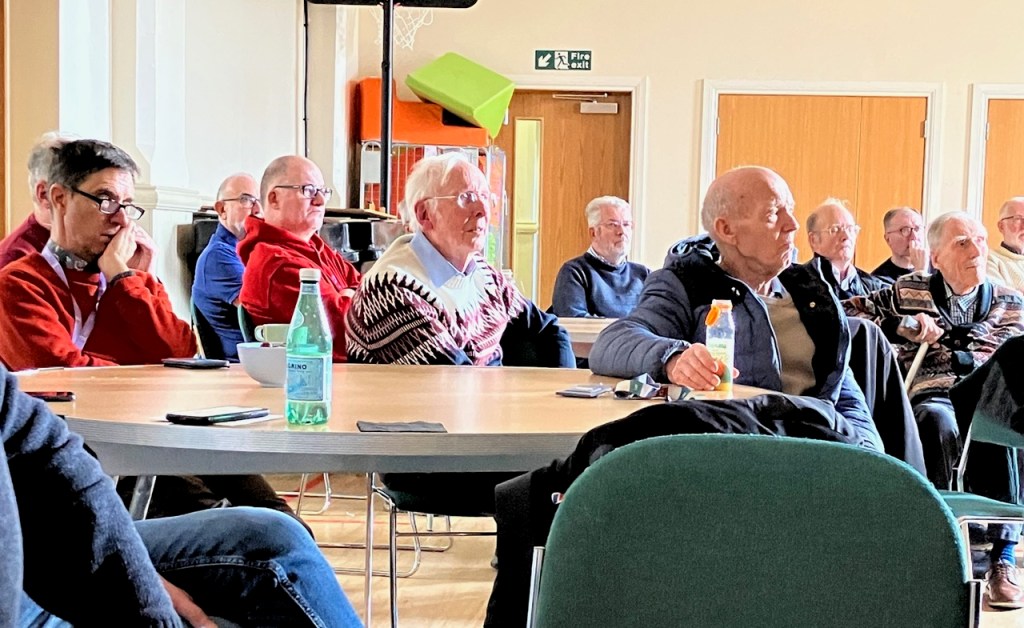
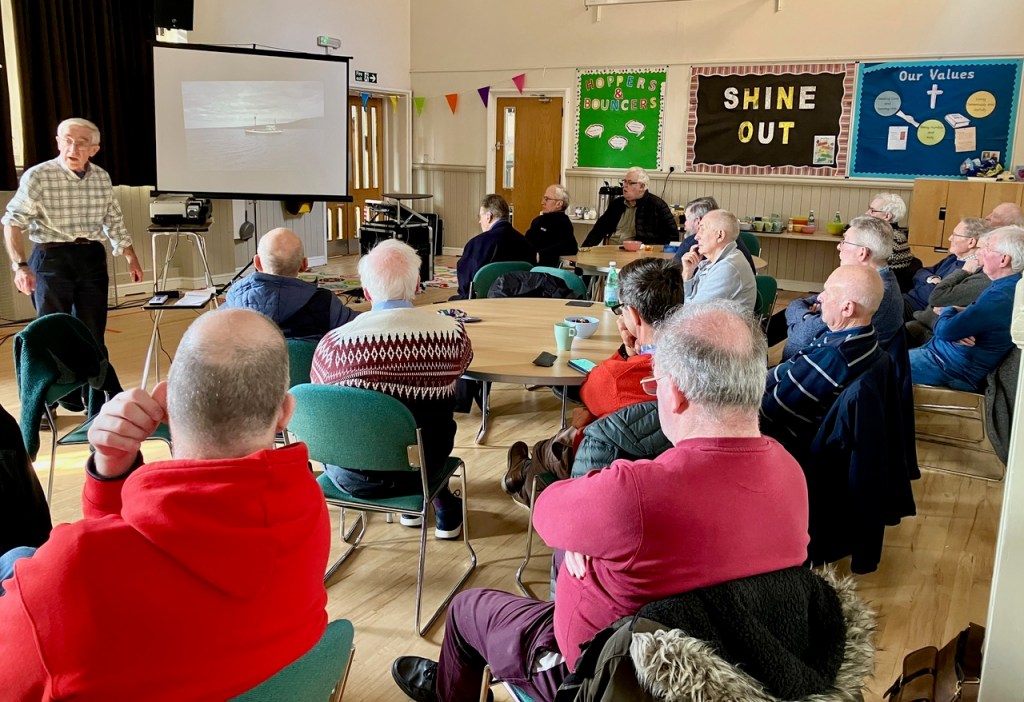
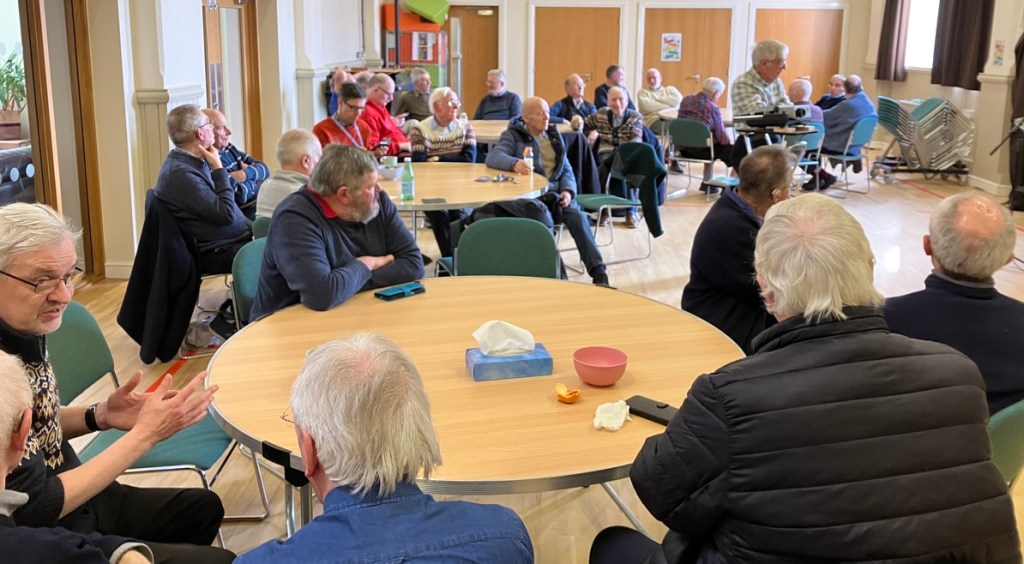
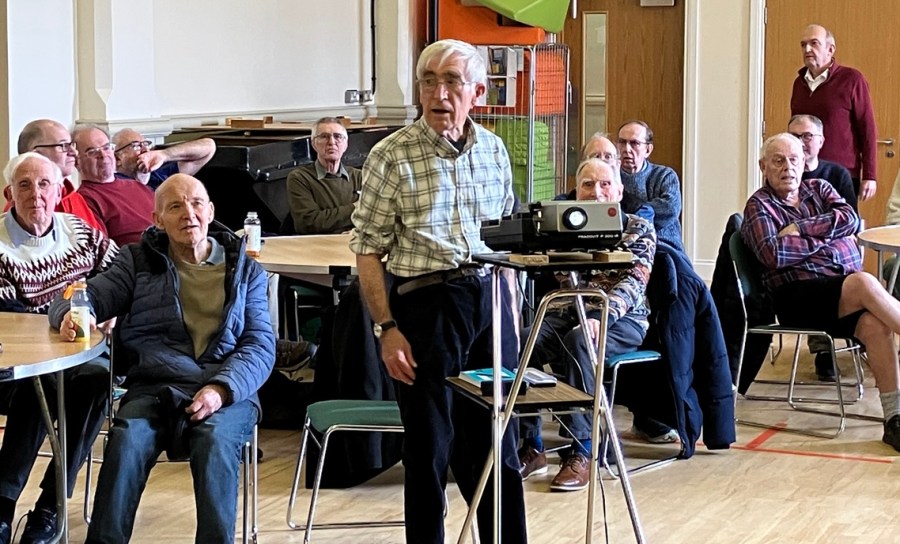
Long standing MIRTH member Paul Davison delivered a fascinating talk on “The Shetland Bus”. In April of 1940 Germany invaded Norway to help secure the supply route of iron ore that was vital to the war. The King of Norway refused to surrender. After leaving Oslo and heading North he was together with key members of the Government evacuated to the UK where they governed in exile throughout the remainder of the war. At the same time Winston Churchill was establishing the SOE (Special Operations Executive) to take the fight behind enemy lines. Therefore the scene was set for the secret operation known as The Shetland Bus to be created.
Paul went on to explain that Norway was a tough place to be a farmer but a great place to be a fisherman. The Norwegian fisherman had great navigational skills, a big network of contact and lots of courage. Many of these fishermen would volunteer for this dangerous work. They came and lived in the Shetland islands as the nearest free land to their now occupied homeland. They then used their skills to smuggle agents and war supplies into the Norwegian resistance and smuggle out refugees that were being hunted by the Gestapo. Most of the operations took place in the Winter months when the longer dark nights provided better cover from the German air patrols. In the first two Winter seasons mainly Norwegian fishing boats were used but these suffered much damage from storms and air attack with casualties reaching nearly 50%.
The USA provided a solution by supplying three submarine-hunting ships. These very fast and agile ships could get in and out of Norwegian waters avoiding navel units and if attacked by aircraft they had excellent AA guns. Each ship was manned by 22 Norwegian volunteers and operated successfully through until the end of the war. The brave resistance of the Norwegian population was supported by this vital secret operation and Germany kept an army of over 280,000 in Norway trying to supress the resistance. Paul highlighted key individuals and memorials that commemorate these brave men in both the Shetland Islands and in Norway.
 MIRTH
MIRTH 